
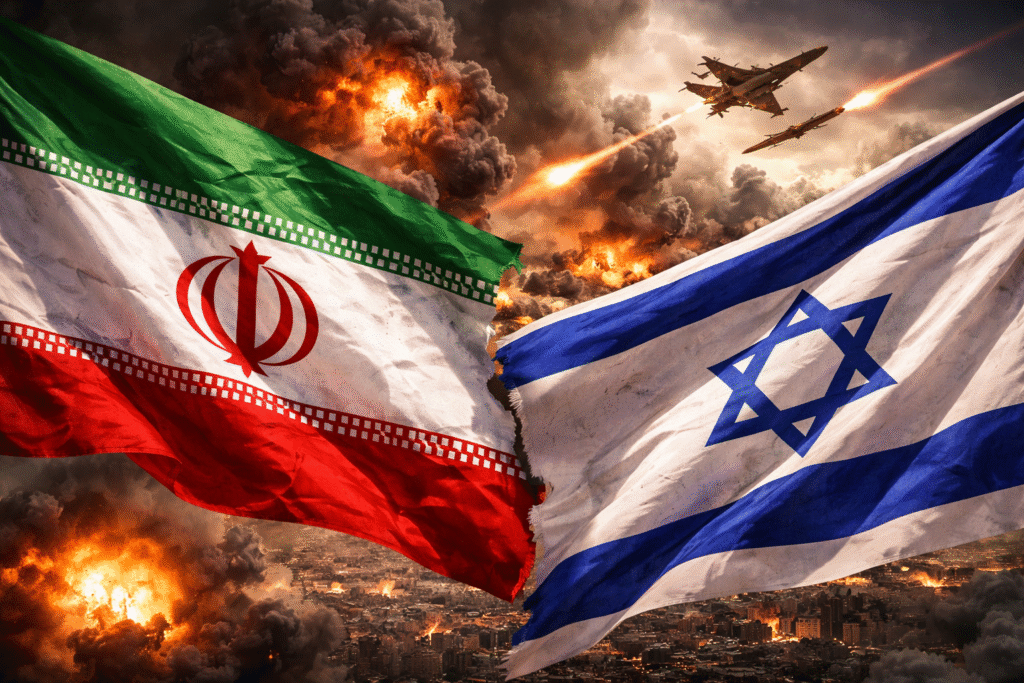
The war between Iran and Israel intensified on March 16, 2026, as both sides launched new airstrikes and missile attacks across the Middle East. The conflict, which began on February 28, 2026, has now entered its third week, raising fears of a wider regional war and global economic disruption.
Heavy Airstrikes Continue
Israeli and U.S. forces carried out overnight strikes on Iranian cities including Tehran, Hamadan, and Isfahan, targeting military and missile facilities. Explosions were reported in multiple areas as the campaign against Iran’s military infrastructure continued.
Israeli officials also said they have plans to continue military operations for at least three more weeks, indicating the war could last much longer.
Iran Launches Missiles and Drones
Iran responded with missile and drone attacks against Israel and Gulf region targets. Reports say several missile salvos were fired toward Israeli areas, while drone strikes targeted infrastructure in the Persian Gulf region.
A drone strike near Dubai International Airport caused a fire and temporarily disrupted flight operations, highlighting the expanding impact of the war beyond Iran and Israel.
Impact on Global Oil and Shipping
The war has also affected global energy markets. Shipping through the Strait of Hormuz, one of the world’s most important oil routes, has slowed due to attacks and security threats. Oil prices have risen to over $100 per barrel, increasing concerns about a global energy crisis.
Casualties and Damage
The conflict has already caused heavy losses across the region:
- More than 1,300 people reported killed in Iran.
- Hundreds killed in Lebanon and several deaths reported in Israel.
- Major infrastructure and residential areas damaged.
International Reactions
World leaders are urging diplomatic talks and de-escalation, but military operations are still continuing. Several European countries are debating whether to send naval forces to secure shipping routes in the Gulf region.
As of March 16, 2026, the Iran–Israel war continues to escalate with missile attacks, airstrikes, and regional tensions affecting global trade and oil markets. Analysts warn that without diplomatic intervention, the conflict could spread further across the Middle East.
Disclaimer:
The information provided in this article is for general informational and news purposes only. While we strive to present accurate and up-to-date information, details about ongoing conflicts may change rapidly and may vary depending on the source. Readers are advised to verify facts from official news sources before making any conclusions. The views expressed in this article do not intend to support or oppose any country, government, or political position.